Stories
Kalyan, Worli, and the Mumbai years in the press
The Indian Express and a Times of India interview describe cotton rates, Kalyanji Bhagat, and Ratan Khatri's account of cards in Mumbai. This page does not retell the whole history article.
Key points
- The side-by-side reading of the two Express articles is already in the history guide. This page does not copy it.
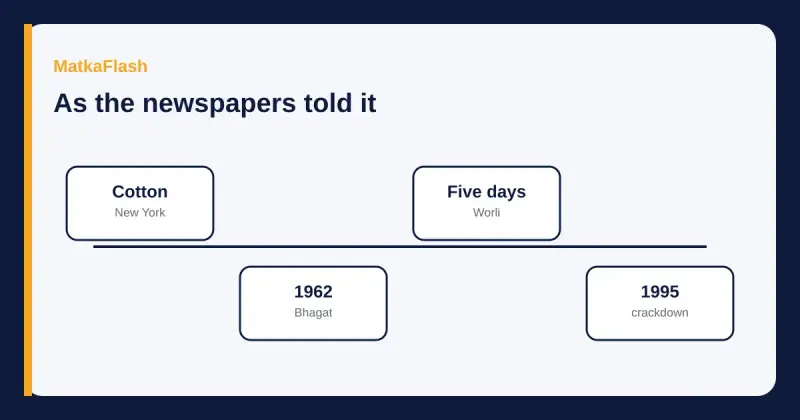
- The 15 October 2018 Express article dates Kalyan Matka to Kalyanji Bhagat in 1962, seven days a week.
- It dates New Worli to Rattan Khatri about two years later, five days, shut on Saturday and Sunday.
- The Times of India story of 10 May 2020 quotes Khatri on Mumbadevi, cotton rates, and three cards at 9pm and midnight.
- A Mumbai Mirror page and a BBC Gujarati page were not opened, so their extra details are not used.
Contents
The history guide is a reading of two Indian Express articles, opened together: 'What is Satta Matka?' on 15 October 2018, and the report of Ratan Khatri's death on 12 May 2020. That page keeps their spellings apart and marks the Rs 1 crore figure as the paper's figure. This page does not repeat that table. It stays on Kalyan, Worli and the Mumbai setting, and it adds a Times of India interview that the other page does not use. Today's Kalyan hours are a stored schedule. They are not this history.
| Claim | Where it is | Limit |
|---|---|---|
| Kalyan Matka started by Kalyanji Bhagat in 1962, seven days a week. He is described as a Gujarat-based farmer | Indian Express, 15 October 2018 | The paper's account, not a government register |
| New Worli started by Rattan Khatri about two years later, five days, shut Saturday and Sunday | Indian Express, 15 October 2018 | Wikipedia dates the new draw 1964. That date is the encyclopedia's, cited here as such |
| Before the card draw, bets followed cotton rates from New York, in the Mumbadevi area | Times of India, 10 May 2020, quoting Khatri | His account to the reporter, not a cotton-exchange ledger |
| He drew three cards at 9pm and at midnight. A 25 paise bet returned around Rs 2.25 or more | Times of India, 10 May 2020 | The returns are what the interview says he claimed. Not a rate to use now |
| A police crackdown in 1995, and 19 months in jail during the Emergency, after which he says he left the business | Times of India, 10 May 2020 | Reported as his account. Not a case file read for this page |
Bhagat, 1962, and the seven-day line
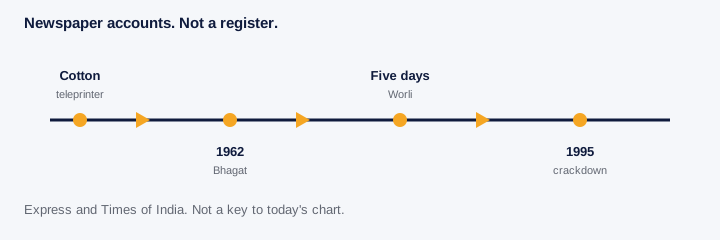
The Express article of 15 October 2018 says Kalyan Matka was started by Kalyanji Bhagat in 1962, that he was a Gujarat-based farmer, and that his lotteries ran seven days a week. It says New Worli Matka was started by Rattan Khatri about two years later, with changes in the rules, and that this lottery ran five days a week and was shut on Saturday and Sunday. The spelling in that article is Rattan. The 2020 Express article, and the Times of India article below, spell the name Ratan. This page keeps the spelling of the sentence it is using. It does not decide which is official.
Wikipedia's article 'Matka gambling' dates Worli matka to Kalyanji Bhagat in 1962 and New Worli to Ratan Khatri in 1964, Monday to Friday, and says Bhagat's ran every day. That matches the Express shape and adds the year 1964. Wikipedia is an encyclopedia summary. Where it adds a village, a building, or a family title, this page leaves those out, because the newspaper page it would be leaning on was not the one opened. The English Wikipedia page was opened. A Mumbai Mirror feature and a BBC Gujarati article were not, so their details are not repeated.
Cotton rates, then cards, in Khatri's words to the Times of India
The Times of India story 'End of a bet-time story', by Shailendra Awasthi, is dated 10 May 2020. It says Ratan Khatri died at his home near Tardeo on Saturday, aged 88. The Express story of 12 May 2020 says he died on a Saturday at his south Mumbai residence after a brain stroke, at 88. Wikipedia dates the death 9 May 2020. Saturday and the two newspaper dates can sit together. This page does not convert them into a certificate.
The Times of India piece says he started in the Mumbadevi business area, where people bet on cotton rates from the New York market. It quotes him: the New York market's five-day week saw compulsive betters looking for alternatives, which he provided. It says close friends asked him to start his own syndicate and that he drew three cards to decide the day's number, twice a day, at 9pm and at midnight. The value of the cards was totalled. The number was relayed across betting hubs in the country and to people connected to him overseas. For a 25 paise bet, the returns were around Rs 2.25 or more. That return is the interview's figure. It is not a price, and it is not a ratio anyone should apply to a modern chart. The Express account of slips in a pot, and of the weekend cotton close, stays in the history guide. The Times of India account here is the card draw at those two hours.
The 1990s crackdown, as the interview tells it
The same Times of India story says a police crackdown on what it calls his unauthorised business in 1995, and the arrest that followed, led him to give it up. It says he spent 19 months in jail during the Emergency. Both points are in the interview's narrative. This page has not read a charge sheet or a jail register, and it does not add names of later operators. The Express article's one sentence on a later murder is already flagged in the history guide as a sentence, not a case this site summarises.
He is quoted saying he knew it was illegal and that he ran it with complete honesty, and that people opened the three cards. 'Illegal' in a quotation is the speaker's word inside a news story. What the 1867 Act says, and what it does not settle for every state, is the legal guide. This history page does not turn the quotation into a verdict. It also does not turn a five-day week in 1960s reporting into a rule that today's Kalyan chart is blank on Sunday. The markets guide says this site stores no such weekly flag.
What the Mumbai years are not for
A story about cards at 9pm, or about cotton rates on a teleprinter, is a story about a method reported for the past. It is not inside a cell of the Kalyan jodi chart. People still sell a setting as if the old accounts of control were a service. If a draw was chosen by a person, the outsider paying to hear the number was the person not choosing it. The guessing guide stays on that. This page stays on the articles.
Common questions
Who does the 2018 Express article name for Kalyan in 1962?
Kalyanji Bhagat, described as a Gujarat-based farmer, with a lottery it says ran seven days a week. That is the account in the paper.
What did Ratan Khatri tell the Times of India about the draw?
The 10 May 2020 story quotes him on three cards, twice a day, at 9pm and midnight, after cotton rates from New York left weekends empty. The Rs 2.25 figure is the claim in the interview about a 25 paise bet.
Why are Mumbai Mirror details missing?
That feature was not opened for this page, and neither was a BBC Gujarati article. Claims that live only there are left out.
Does this history explain the Kalyan time used today?
No. Stored hours are in the markets guide. A newspaper account of the 1960s is not a clock for the current chart.
Sources
- The Indian Express, What is Satta Matka, 15 October 2018indianexpress.com
- The Indian Express, Mumbai: Ratan Khatri, the matka king, dies at 88, 12 May 2020indianexpress.com
- The Times of India, End of a bet-time story: Matka king Ratan Khatri dies in Mumbai, 10 May 2020timesofindia.indiatimes.com
- Wikipedia, Matka gambling, for the 1962 and 1964 dates as an encyclopedia summaryen.wikipedia.org
- Directorate General of Health Services, National Mental Health Programmedghs.mohfw.gov.in
Keep reading
 StoriesWho invented satta matka? The full storyThe press story of cotton rates, Kalyanji Bhagat in 1962, Ratan Khatri, a pot, and the 1990s. Reports, not a register.7 min read
 StoriesWhy the game is called matkaHow Indian Express reports describe an earthen pot, chits, and cards after the cotton rate. Not a chart patent.6 min read
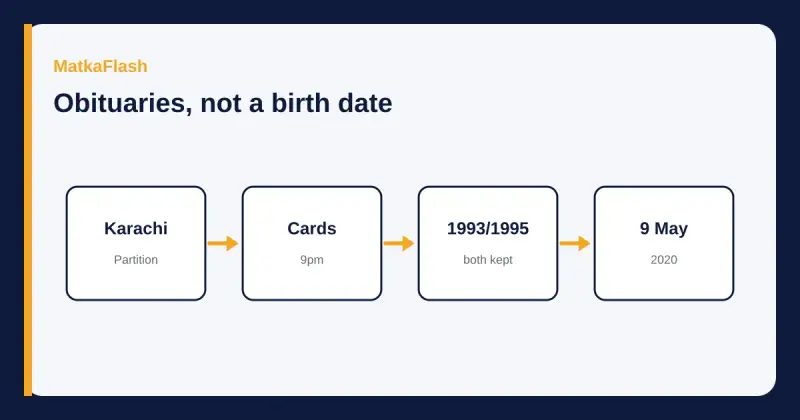 StoriesRatan Khatri, as the obituaries tell itWhat the May 2020 obituaries report about Ratan Khatri: Karachi, cotton, cards, jail, and two dates for when he stopped.7 min read
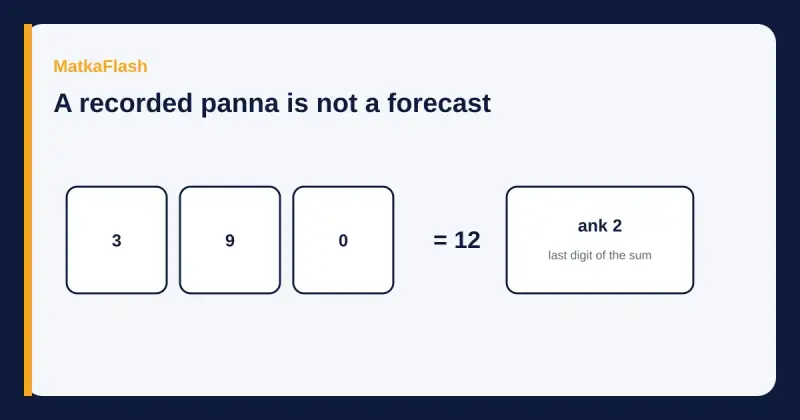 BasicsWhy guessing and fix ank do not workA matka chart records a draw that already happened. Fix ank lists and weekly jodis do not name the next independent draw.6 min read