Basics
Why guessing and fix ank do not work
A chart keeps a number that has already been declared. It does not name the next one, and paying someone does not change that.
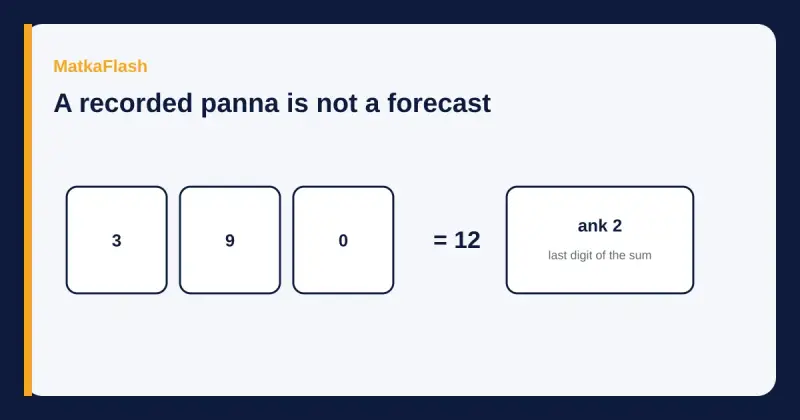
Key points
- A published row is a past declaration, not a promise about the next one.
- A repeated jodi is a fact about those days. It is not 'due' to happen again.
- A seller who could know the number would not need to sell it for a small fee.
- A screenshot of a hit hides the guesses that missed.
- The digit sum checks a recorded panna. It does not forecast tomorrow.
Contents
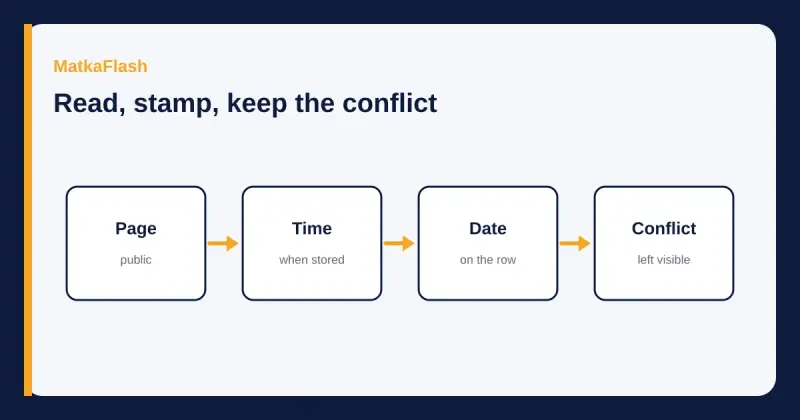
A number on a matka chart is a record of a declaration that has already been made. MatkaFlash stores an open panna, a two-digit jodi and a close panna when a public page prints them, with the date and the time that page was read. People still ask for a fix ank, a weekly jodi or a guessing trick. Those offers all claim that someone can name the next digit before any source has printed it. This guide explains why a chart does not support that claim.
| Claim | What the record shows |
|---|---|
| The last jodi is due to change | The last jodi is only a past row |
| A fix ank is known before the draw | No result exists until a source prints it |
| A weekly list is research | A long list sometimes contains the declared pair by chance |
| The digit sum picks tomorrow | The digit sum checks a panna that is already written |
A row does not reach the next draw
Yesterday's jodi belongs to yesterday. The next declaration, if one is made, is a separate event. Nothing in the printed row forces the following row to match it or to avoid it. A long run of one digit does not make another digit due. That belief is the gambler's fallacy. A coin that has landed heads ten times is not required to land tails next. The coin has no memory of the earlier tosses. A published matka number is a selection that already occurred. The previous selection is not an ingredient of the next one.
A chart that shows the same pair twice in one week is a description of those two dates. It is not a pattern you can spend. Counting how often a pair appeared last month answers a historical question. It does not assign the next date. If it did, the archive itself would be a prediction engine, and the empty cells in the current week would already be filled. They are empty because the declaration has not been recorded.
Why a paid guess is the product
A fix-ank pitch says a person, a setting or a formula already knows the digit. Follow that claim to its end. If the seller could name the declared digit in advance, the valuable use of the knowledge would be to use it, not to sell it to strangers for a small fee. The fee is what the business collects whether the digit later matches or not. The number is the bait that gets the fee paid.
Weekly jodi lists are the same offer written out as a menu. There are 100 two-digit pairs from 00 to 99. A list that names twenty of them will sometimes contain the pair that is later declared, just by the size of the list. The list does not say which of the twenty was the real pick, and it does not show the earlier lists that missed. If you only ever see the list that happened to contain the result, you are looking at a selected example. This page is not a disguised list, and the chart guide shows what a real grid of records looks like.
A screenshot is not a track record
After the declaration, anyone can post the days that matched and stay quiet about the days that did not. A screenshot of a correct guess can be a real past match and still be a bad record, because the misses are missing. That is survivorship. An archive does the opposite: it keeps the row on the day it was declared, including the rows that would have embarrassed a guess. When two public sources disagree, this site marks the conflict instead of picking the number a guesser would prefer.
The digit sum is a check
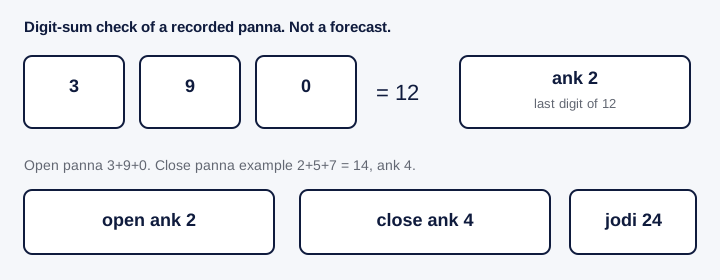
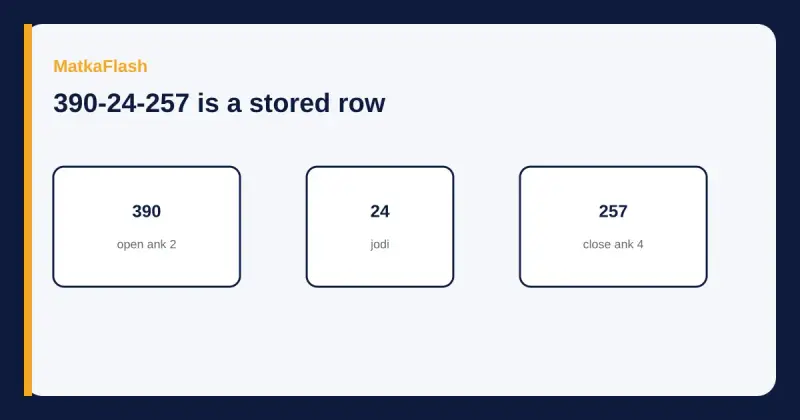
MatkaFlash treats the ank of a panna as the last digit of the sum of its digits. Take a teaching example, not a tip. Open panna 390 uses the digits 3, 9 and 0. They sum to 12, so the open ank is 2. Close panna 257 uses 2, 5 and 7. They sum to 14, so the close ank is 4. The jodi written from those two anks is 24. The sum can confirm that a recorded row agrees with itself. It cannot name tomorrow's three digits, because those digits are not inside today's sum. The diagram above is only that check.
The word 'final' in a final-ank advertisement is sales language. Until a source prints a number for that date, there is no final number to store. An empty cell on a market chart, including the Kalyan jodi chart, is a day without a record. It is not a hint about what to play, and it is not an invitation to buy a third number from a stranger.
Controlled or not, the fee is not information
Old newspaper accounts of cotton rates and slips in a pot are stories about how a number was chosen or carried in the past. They are not a method for naming the next one. A story that a particular person knew the number is a story about control of a draw. If a draw is controlled, the outsiders are the people being fooled, and paying one of them does not put you on the inside. If a draw is not controlled, nobody has the number in advance. In either case the paid guess is not information you can verify before the declaration.
What a chart can do is narrower. You can see what was declared, on which date, and whether the digits agree with the jodi. You can see when the source was read, and you can see a holiday left blank instead of a made-up number. If someone asks you to pay for a coming ank, the scam guide describes the usual second demand, and the editorial guide explains why this site does not sell one.
Common questions
Does a repeated jodi mean it will come again?
No. A repeat is a fact about past rows. It does not schedule the next declaration.
Can the digit sum of a panna predict the next panna?
No. The sum describes digits that are already written down. It does not choose future digits.
Why do sellers show screenshots of correct guesses?
A screenshot can be a real past match and still hide the guesses that missed. Selected hits are not a full record.
Does MatkaFlash sell a fix ank or a weekly jodi?
No. The site records public results. It does not sell numbers, and this guide is not a list of pairs to play.
Sources
Keep reading
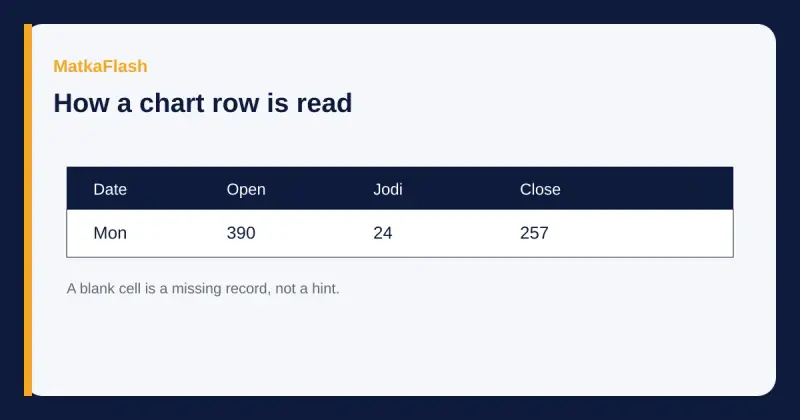 BasicsHow to read a jodi or panel chartWhat the date, open panna, jodi and close panna columns record, and why a blank cell is not a forecast.6 min read
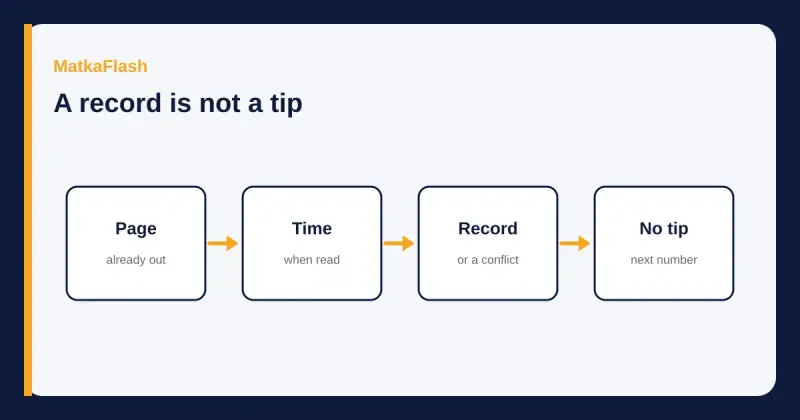 BasicsWhy a results page does not sell tipsWhat a dated matka record can show, what it cannot know, and why the MatkaFlash desk does not sell a coming number.5 min read
 BasicsA plain glossary of matka chart termsWhat open, close, jodi, panna, ank, sangam, starline and jackpot mean on a results page, using a stored Kalyan row.6 min read
 BasicsHow a matka result gets onto this siteOpen and close times, pending, holiday, why two sites can differ, and how MatkaFlash keeps sources and timestamps.6 min read