Stories
Who invented satta matka? The full story
Newspapers describe cotton rates from New York, then a pot, then two Mumbai names. This is that story, with the dates kept inside the articles that print them.
Key points
- No government register names an inventor. The story is what major papers printed.
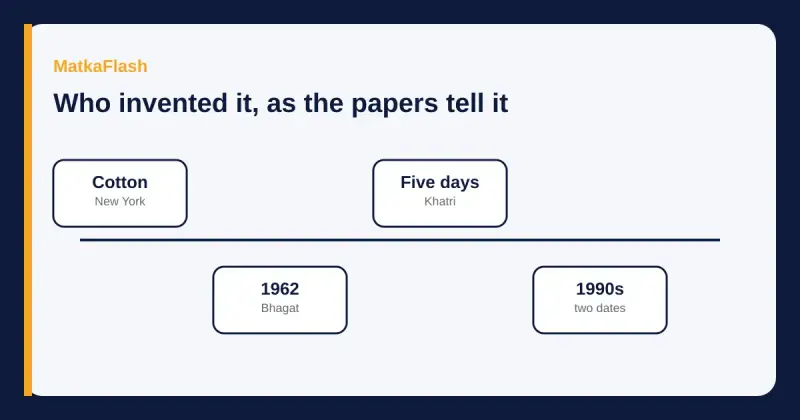
- The 15 October 2018 Express article ties the old form to New York cotton rates sent to the Bombay Cotton Exchange by teleprinter.
- That article dates Kalyan Matka to Kalyanji Bhagat in 1962, seven days a week.
- It dates New Worli to Rattan Khatri about two years later, shut on Saturday and Sunday. A 13 February 2019 Times of India page says 1964, and says it does not own that text.
- The 1990s are told two ways: a 1995 crackdown in the Times of India, and a 1993 exit in a 15 May 2020 Express Explained. This page does not merge them.
Contents
People ask who invented it, where it started, and how it changed. There is no register that answers in one line. What there is, opened for this series, is a set of newspaper accounts. This page is the spine. The word matka stays with the pot. The Kalyan and Worli chapter stays with the two Mumbai names. The profile of Ratan Khatri stays with the obituaries. None of them is a number to play.
| When, as reported | What the paper says | Where |
|---|---|---|
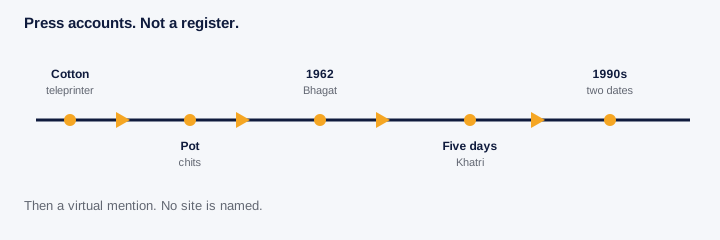
| Old form, including the 1960s | Bets on cotton opening and closing rates from the New York Cotton Exchange to the Bombay Cotton Exchange, by teleprinter | Indian Express, 15 October 2018, and again in the 12 May 2020 report |
| 1962 | Kalyan Matka, Kalyanji Bhagat, a Gujarat farmer in that article, seven days a week | Indian Express, 15 October 2018 |
| About two years later, or 1964 | New Worli, Rattan or Ratan Khatri, five days, weekends shut | Express, 15 October 2018. Times of India, 13 February 2019, prints 1964 and disclaims ownership of the text |
| Weekend gap | The New York market was shut, so the draw became chits in a pot | Indian Express, 12 May 2020 |
| 1993, or 1995 | He left in 1993, in two attributed versions. A 1995 crackdown and arrest, in the Times of India | Express Explained, 15 May 2020. Times of India, 10 May 2020 |
| After that | A virtual version exists, and one journalist says urban play moved online. Cricket betting overtook it | Express Explained, 15 May 2020. No site is named |
Cotton rates, before any pot
The Indian Express article of 15 October 2018, What is Satta Matka, says the game has been popular since the pre-independence era and that, in olden times, it was based on betting on the opening and closing rates of cotton. Those rates, it says, were transmitted to the Bombay Cotton Exchange from the New York Cotton Exchange by teleprinters. The 12 May 2020 Express report of Ratan Khatri death says that before Khatri Matka there was Kalyan Matka or Worli Matka, run by Kalyanji Bhagat, and that this business used the opening and closing rates of cotton from the New York Cotton Exchange in the 1960s. The number, in that telling, arrived as a rate. It was not a chart formula.
The same 2018 article then contrasts a modern form: a random selection of a number by the person taking part. Kalyan and Worli, it says, are the two most commonly organised lotteries, most popular in Maharashtra. Random, in a news paragraph, is the contrast with the cotton method. It is not a statistical test, and it is not a claim that the cotton exchange is still the source of a cell on this site.
Two names, and the years the papers attach
The 2018 article says Kalyanji Bhagat started Kalyan Matka in 1962, describes him as a Gujarat-based farmer, and says his lotteries ran seven days a week. It says New Worli Matka was started by Rattan Khatri about two years later, with changes in the rules, five days a week, shut on Saturday and Sunday. The 12 May 2020 report spells the name Ratan. A Times of India page dated 13 February 2019 also says 1962 for Bhagat and 1964 for New Worli, Monday to Friday. That page says the Times of India claims no ownership of the text, so this series treats 1964 as a date printed there and on Wikipedia, not as a year from a register. The interview detail, including an account from his son dated 2 April 1962, is in the Kalyan and Worli chapter only where this series has opened the Express Explained of 15 May 2020. It is his account to the paper, not a deed.
From a rate to a draw
The 12 May 2020 Express report gives the weekend a mechanical reason. It says Khatri used the fact that the New York Cotton Exchange was shut, and that the matka he started drew lots from chits in a pot. Telephones then carried the number across the country. The clientele, the article says, was mainly mill workers and others who could place only smaller bets. The daily turnover of Khatri Matka, it says, went up to Rs 1 crore. That is the papers figure. It is not an audit. How the pot and the word sit together is the next chapter, why it is called matka.
The 1990s, told twice, and what came after
The Times of India of 10 May 2020 says a police crackdown in 1995, and the arrest that followed, led him to give the business up. It also says he spent 19 months in jail during the Emergency. The Express Explained of 15 May 2020 says he gave the business up in 1993, and it prints two versions of why, each attributed to a person: a source close to him, and the journalist Vivek Agarwal, with a former DCP said to corroborate the second. This page does not choose. Both dates stay on the table. The profile keeps the quotations.
The same Explained article says there is now a virtual version of matka, once described as a casino for people with little money, and that it has been overtaken by cricket betting and online lottery. Journalist Vivek Agarwal is quoted saying that in most urban centres it has moved online, and that in rural areas a bookie still collects a stake from a place known to the people involved. No website, app, or bookie is named. This series does not add one. A rise-of-apps chapter would have been a directory. It was not written.
What the story is not for
A history of how a number was carried is not a method for naming the next one. Cotton rates, chits, cards and telephones are mechanisms reported for the past. They are not inside a cell of the Kalyan chart. When an article calls the game illegal, that is the articles word. The statutes that were opened, and the 2025 Act that starts only when a gazette notice says so, are in the legal guide. The Bombay Act of 1887 was not opened from a verified text, so it is not summarised here.
Common questions
Who invented satta matka?
No register names one inventor. The 15 October 2018 Express article dates Kalyan Matka to Kalyanji Bhagat in 1962, and New Worli to Rattan Khatri about two years later. Those dates are the articles.
Where did the cotton-rate version run?
The 2018 Express article says rates were sent from the New York Cotton Exchange to the Bombay Cotton Exchange by teleprinter. The 12 May 2020 report places that business in the 1960s, before the pot.
Did the business move to Dubai in the 1990s?
Not in the articles opened for this page. The Times of India says numbers were relayed to people overseas. It does not describe a move of the business to Dubai.
Does this story name the next result?
No. It is a reading of old reports. A chart on this site is a dated record, not a continuation of those reports.
Sources
- The Indian Express, What is Satta Matka, 15 October 2018indianexpress.com
- The Indian Express, Mumbai: Ratan Khatri, the matka king, dies at 88, 12 May 2020indianexpress.com
- The Indian Express Explained, Flashback on Rattan Khatri, 15 May 2020indianexpress.com
- The Times of India, Ratan Khatri dies in Mumbai, 10 May 2020timesofindia.indiatimes.com
- The Times of India, What is Satta Matka, 13 February 2019, with the papers ownership disclaimertimesofindia.indiatimes.com
- Directorate General of Health Services, National Mental Health Programmedghs.mohfw.gov.in
Keep reading
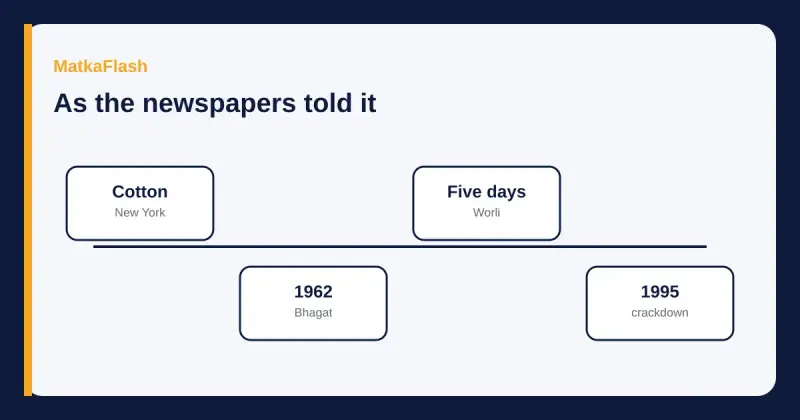 StoriesKalyan, Worli, and the Mumbai years in the pressWhat the Express and a 2020 Times of India interview report about Kalyanji Bhagat, Worli, and Ratan Khatri in Mumbai.7 min read
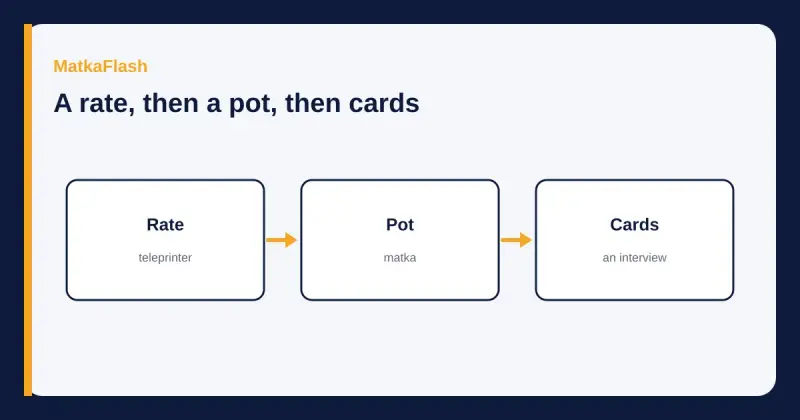 StoriesWhy the game is called matkaHow Indian Express reports describe an earthen pot, chits, and cards after the cotton rate. Not a chart patent.6 min read
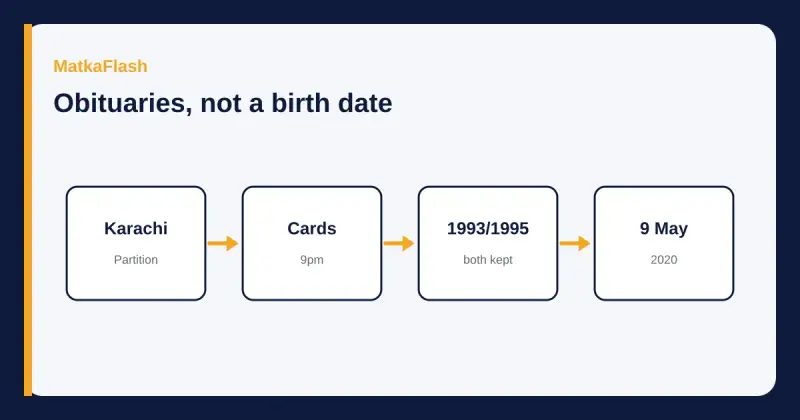 StoriesRatan Khatri, as the obituaries tell itWhat the May 2020 obituaries report about Ratan Khatri: Karachi, cotton, cards, jail, and two dates for when he stopped.7 min read
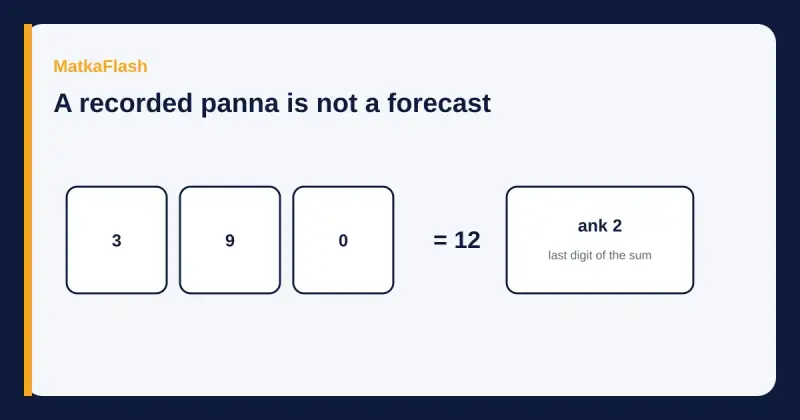 BasicsWhy guessing and fix ank do not workA matka chart records a draw that already happened. Fix ank lists and weekly jodis do not name the next independent draw.6 min read