Safety
How fix-game scams ask for a second fee
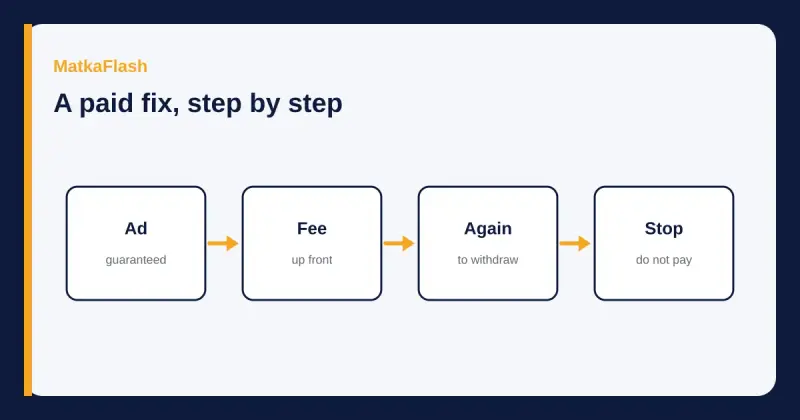
A guaranteed number is the bait. The first payment, and the payment after it, are what the pitch is selling.
Key points
- The first fee buys a story, not a number that has been declared.
- A second fee 'to release winnings' is the usual next demand.
- A real bank does not need a stranger's release code.
- Stop paying. Keeping the messages is more useful than sending more money.
- If money has already moved, tell the local police or use the official cybercrime portal. Do not use a link from the same chat.
Contents
A fix-game pitch offers a matka number that is supposed to be certain, then asks for money before any public page has declared that number. The same story turns up under many names. You do not need a famous case to recognise it: the fee comes first, and the number is only the reason to pay.
| What they say or do | What to do |
|---|---|
| Guaranteed, fixed, or set number | Treat it as an advertisement. A record does not exist yet. |
| Pay a fee before the declaration | Do not pay. The fee is collected either way. |
| Screenshot of an old correct guess | Ask for the misses. A selected hit is not a record. |
| Pay again to withdraw or unlock | Stop. Do not send a second amount. |
| Account blocked until a release code is bought | A bank does not work that way. Leave the chat. |
| Threats, shame, or urgency | Do not negotiate. Keep the messages if you already paid. |
The usual sequence
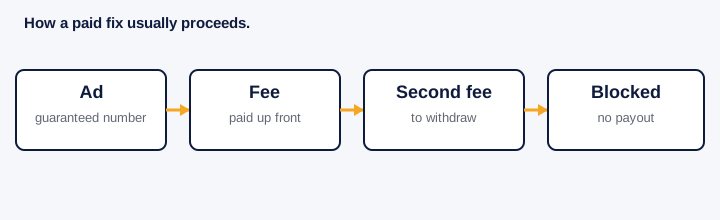
The advertisement says the number is fixed for a named market and a named time. The price is small compared with the payout that is promised. After the fee, a digit arrives. If it misses, the excuse is that the setting changed, the line was cut, or a second market is the real one, and another fee is due. If it hits, the excuse changes shape: the winnings are stuck, and a tax, a release code or a verification deposit will free them. The diagram shows that order.
The withdrawal that never opens
The second fee is the part that empties an account. The story needs a reason you cannot simply receive the money. A blocked wallet, a pending bank check, or a code that costs a percentage of the supposed win all serve that purpose. Paying it does not open the wallet. It proves you will pay again. People often send the second amount because the first amount already feels lost, and the new payment is framed as the way to get both back. That framing is the trap.
Do not share a one-time password, a card number, or a photo of an identity document with the same chat. The demand looks the same whichever app was used, so the app name does not matter. If money has already moved, stop the transfers you still control. Saving the chat is more useful than arguing inside it.
If you have already paid
Stop any transfer you still control, and keep the messages. Report what happened to your local police, or through the official cybercrime portal that you open yourself. Do not use a link, a form, or a phone number sent inside the same chat that asked for the fee. Another payment will not unlock a wallet.
Shame and sleeplessness often arrive with the loss. That distress is a reason to talk to a person, not a reason to send a third payment to 'make the first one back'. The help box on this page quotes the Tele-MANAS numbers printed by the Directorate General of Health Services. Those numbers are for mental health support. They are not a fraud desk, and a call is not a diagnosis. The addiction guide is about warning signs. The guessing guide is about why the number was never information.
What a results page will not ask
MatkaFlash does not ask for a fee, a wallet, or a phone number in exchange for a coming ank. A page that does is a different business, even if it copies result tables. If a message claims to be this site and then asks for payment, it is not this site. Corrections and contact, when an address is configured, are described on the editorial policy. There is no tip line hiding behind the contact page.
Common questions
If the first number hit, is the withdrawal fee real?
No. A hit, if it even happened, does not create a wallet that a stranger must unlock. The second fee is the same pitch continued.
Should I pay a smaller amount to get the larger amount back?
No. Another payment shows that the demand works. Stop the transfers you still control.
Where should I report the payment?
Report it to your local police or the official cybercrime portal. Do not use a number or a link from the person who asked for the fee.
Can MatkaFlash recover money that was sent?
No. This site records public results. It does not hold accounts, and it cannot reverse a transfer.
Sources
Keep reading
 SafetyHow to spot a fake matka result site or appCopied results, fake live claims, paid groups and APK files. A checklist for leaving, not a list of sites to join.5 min read
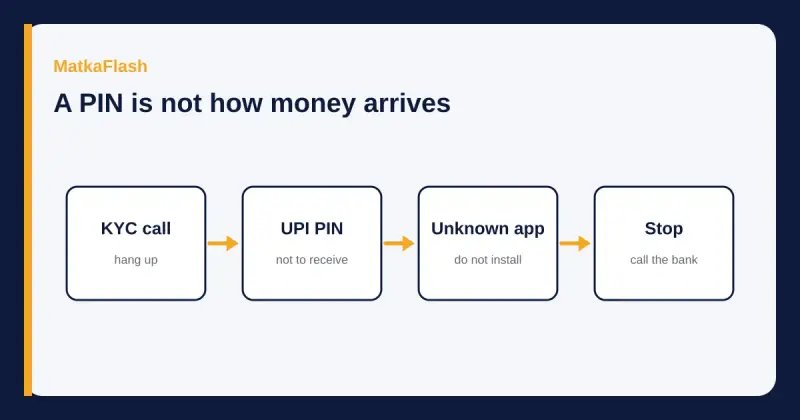 SafetyRisks that follow a betting app and a UPI paymentWhat the RBI's 28 January 2022 note says about KYC calls, unknown apps and a UPI PIN asked in order to receive money.7 min read
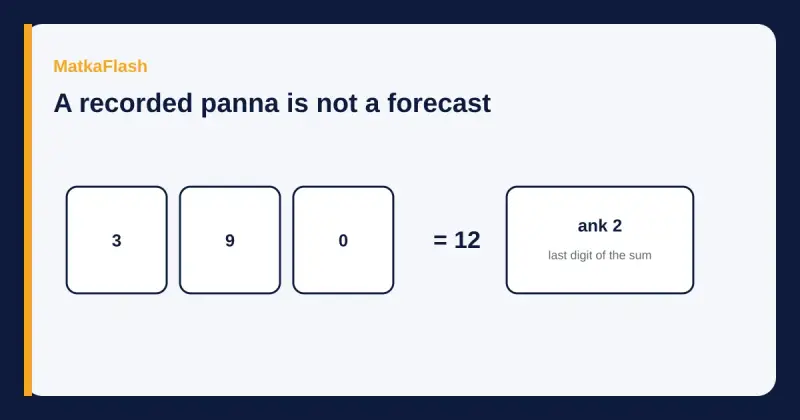 BasicsWhy guessing and fix ank do not workA matka chart records a draw that already happened. Fix ank lists and weekly jodis do not name the next independent draw.6 min read
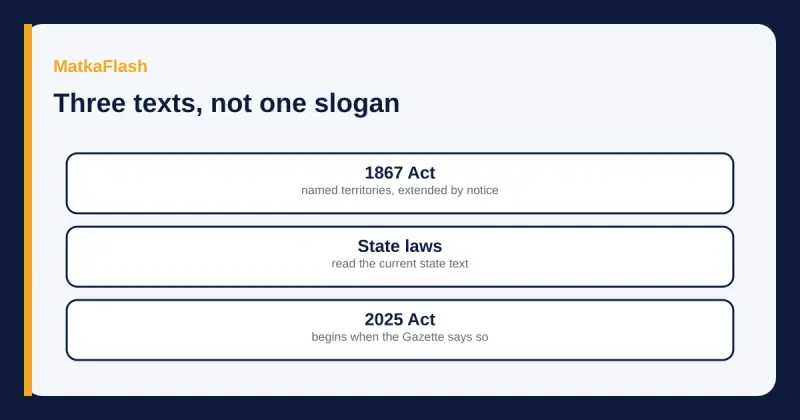 LegalIs satta matka legal in India?What the 1867 Act, Article 246 and the 2025 online gaming Act actually say. Not a yes, not a no, and not legal advice.7 min read