Basics
Why a results page does not sell tips
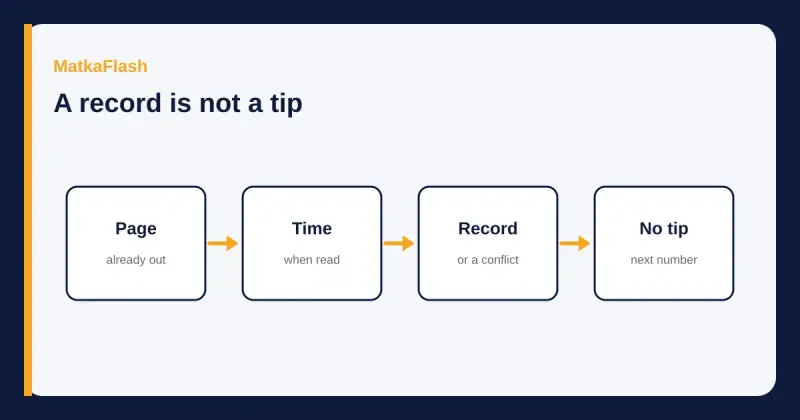
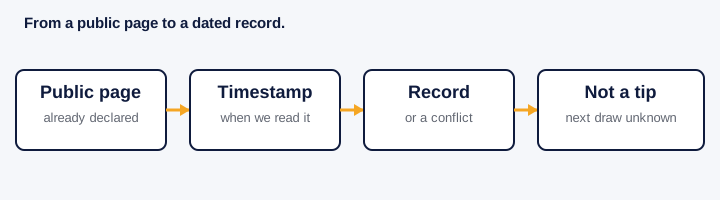
A result is a number that has already been declared. A tip is a claim about a number that has not. This site publishes the first and refuses the second.
Key points
- A results page can show a dated public row, a source time, and a conflict.
- It cannot know a declaration that has not been printed.
- Selling a tip would be a different product, aimed at the hope the record does not contain.
- The byline is the MatkaFlash editorial team. No personal name is invented.
- Corrections go through the editorial policy. A correction is not a new prediction.
Contents
A results site and a tip site can look alike for a second. Both show numbers. The difference is the tense. A result is past. A tip is a claim about a declaration that has not happened. MatkaFlash is built as the first of those. This page says who writes it, what the desk will publish, and why a coming ank is not on the price list, because there is no price list.
| A results page | A tip |
|---|---|
| A date, or an explicit statement that the date is missing | A future session |
| Open, jodi and close as printed, or a blank | A number that 'must' come |
| The time the source was read | A promise that the source will obey |
| A conflict when dated sources disagree | One number chosen because it flatters the guess |
| A holiday left as a holiday | A filled cell so the grid looks busy |
| A correction when the record was wrong | A new guess after the old one missed |
Who writes this, and why that byline is a team
These guides are signed by the MatkaFlash editorial team, the people who publish the public results. There is no single celebrity expert behind the byline. What the team does is keep the date, the source time and any conflict on the row. The about page says what the site is. The editorial policy says how a wrong row is corrected. Both are linked from the box at the top of every guide.
The team does not play, does not take a stake, and does not run a book. That limit is the reason the site can describe scams and legal texts without also selling the product those texts and those scams are about. A desk that sold a weekly jodi would be describing its own advertisement. This one is not.
What the record cannot know
Until a public page prints a number for a date, the honest cell is empty. Guessing a digit to avoid the empty cell would make the archive look fuller and would make it false. The chart guide walks through the columns. The guessing guide says why a full-looking list is still not knowledge. A tip is that list with a price. The price does not add information. It adds a reason for the seller to send something before the declaration, because the something is what was paid for.
Some markets on this site are thin, and some families were not on the public pages the desk is allowed to read. Those pages stay empty or say so. Copying a cousin market into the blank would be a convenient fiction. Delhi Satta is the plain example: the two-digit charts people ask for were not on the allowed pages, so the cells are not filled. A tip site would find that silence hard to sell. A results site can leave it as silence.
Corrections are not tips
A row can be wrong. A source can update. Two sources can disagree and a later read can settle which dated line was the one to keep. The editorial policy is the route for that. A correction changes the past tense of the record. It does not reach forward. Readers sometimes treat an edit as a sign that the desk 'knows more than it prints' and will share the rest for a fee. There is no rest. The printed row, including a blank or a conflict, is the whole of what was verified.
Contact, when an email is configured in the environment, is a corrections address. It is not a booking line. The desk does not reply with an ank. Messages that ask for one are asking for the product this page refuses. The scam guide describes the people who answer that request with a fee. If a message uses the MatkaFlash name and then asks for payment, it is not this site.
What a reader can fairly expect
A reader can expect a dated row when a dated public source supplied one, a visible time for when it was read, and a mark when the row is inconsistent. A reader can expect holiday pages and chart pages to say when they have nothing. A reader cannot expect the next jodi, a fix ank, a weekly list, or a private message that 'the real number' is available off the page. Those expectations belong to a different kind of site. This one will keep failing them on purpose.
Common questions
Who is the author of these guides?
The MatkaFlash editorial team, which publishes the results. The byline is the team, not a named expert.
Why not sell a tip if the chart is already public?
The chart is a past record. A tip is a claim about a declaration that has not been printed. The chart does not contain that claim, so there is nothing honest to sell.
Does a correction mean the desk is holding a better number back?
No. A correction fixes the record of what was declared. It is not a preview of the next declaration.
Will the contact address reply with an ank?
No. When an address is configured, it is for corrections. It does not send numbers to play.
Sources
Keep reading
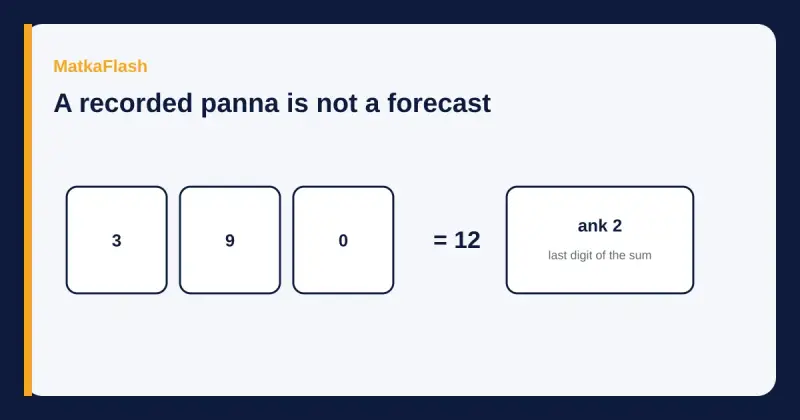 BasicsWhy guessing and fix ank do not workA matka chart records a draw that already happened. Fix ank lists and weekly jodis do not name the next independent draw.6 min read
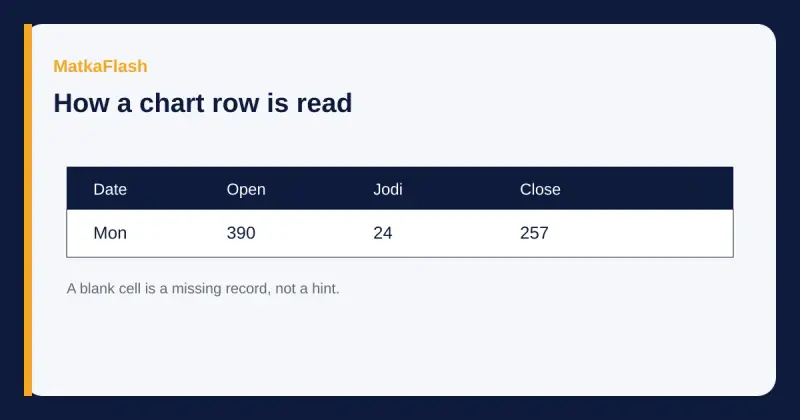 BasicsHow to read a jodi or panel chartWhat the date, open panna, jodi and close panna columns record, and why a blank cell is not a forecast.6 min read
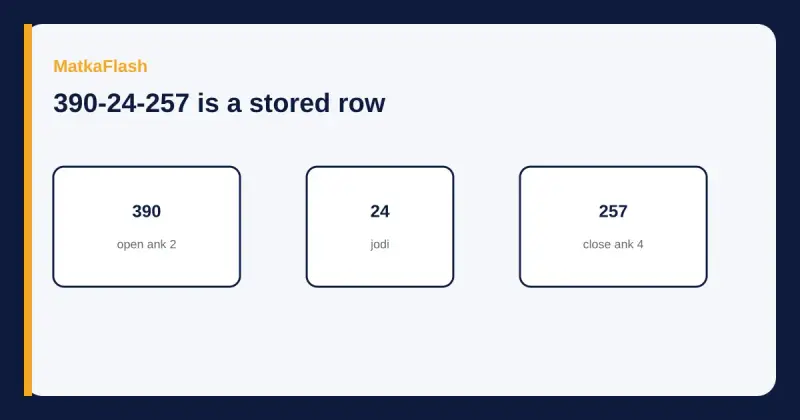 BasicsA plain glossary of matka chart termsWhat open, close, jodi, panna, ank, sangam, starline and jackpot mean on a results page, using a stored Kalyan row.6 min read
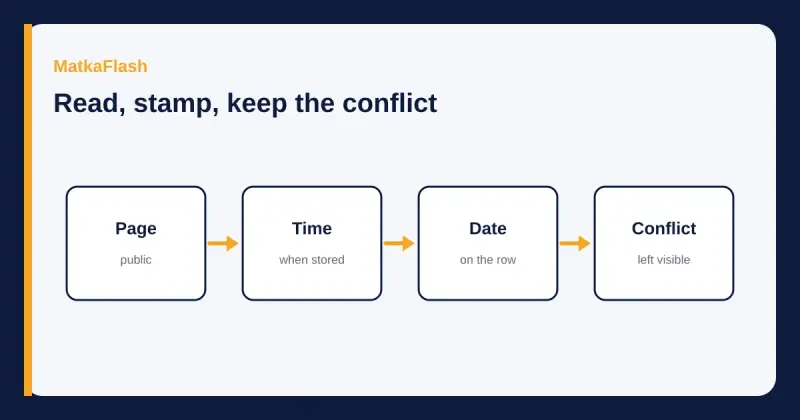 BasicsHow a matka result gets onto this siteOpen and close times, pending, holiday, why two sites can differ, and how MatkaFlash keeps sources and timestamps.6 min read