Basics
Hot numbers, due numbers, and the gambler fallacy
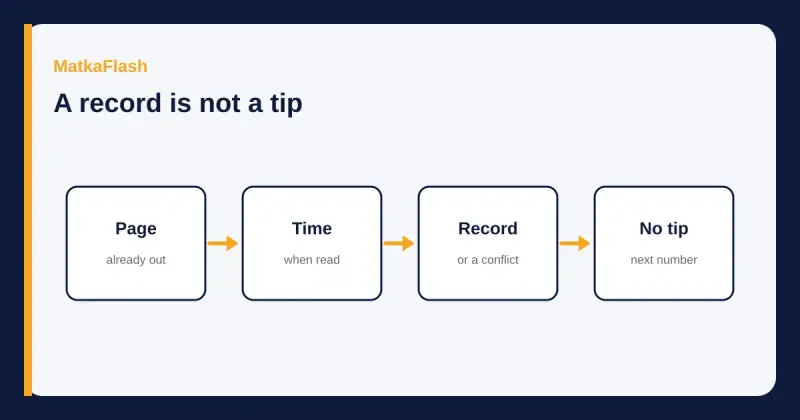
A chart can count what already happened. If a draw were random, that count would not change the next one. A miss does not make a digit due.
Key points
- The gambler's fallacy is the belief that a miss makes the next hit more likely.
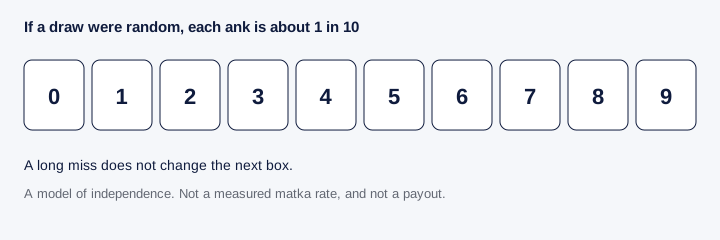
- If each ank 0–9 were equally likely and independent, each one is about 1 in 10 on the next draw.
- A jodi is one of 100 pairs, about 1 in 100 under that same model. The model is not a measured payout.
- Chasing a loss adds a new stake. It does not collect a refund from the chart.
- A repeated pair in the archive is a fact about those dates. It is not a habit of the market.
Contents
A matka chart is a diary. The stories people tell about it are usually about the future: this digit is hot, that one is cold, this pair is due because it has not appeared. Those stories feel like arithmetic. They are a mistake with a name. The gambler's fallacy is the idea that a run of results changes the chance of the next independent result. This page says what that mistake is, with a small model, and it does not turn the model into a number to play. The guessing guide is the longer version of the same refusal.
| Myth | Fact |
|---|---|
| It missed twenty times, so it is due | If the draws are independent, the next chance is unchanged |
| A hot ank will continue | A run is a description of the past, not a force on the next row |
| A cold ank must appear to balance the chart | The chart does not keep a balance that the next draw has to pay |
| One named ank, if the draw were random | About 1 in 10 |
| One named jodi from 00 to 99, under the same model | About 1 in 100 |
| Chasing the loss gets the money back | Chasing adds another stake. The earlier loss stays spent |
The one-in-ten model, and what it is not
Suppose, only as a model, that a single ank is drawn from 0 to 9, each digit equally likely, and that the next draw does not remember the earlier ones. Then each named ank has about one chance in ten on that draw. Two named anks written as a jodi are one pair out of one hundred, from 00 to 99, so about one chance in one hundred under the same idea. These are classroom fractions. They are not a payout, not a house edge measured from a bookie's book, and not a claim that any real matka draw has been shown to work this way. The pros and cons uses a separate made-up ticket to talk about loss. Do not mix the two into a price.
The useful part of the model is the independence. A coin that has landed the same way many times is not required to land the other way next. The coin has no memory. A published ank is a selection that already happened. It is not an ingredient of the next selection. Twenty misses do not make the twenty-first draw owe you the digit. If the draws were not independent, because a person chose them, the outsider still does not gain a formula. A controlled number is least available to the person paying to hear it.
Hot, cold, and the chart as a diary
Hot and cold are counts. An ank that appears often in a month was frequent in that month. An ank that does not appear was absent. Neither count reaches the empty cell in the current week. The chart guide says a blank is a missing record. People promote the blank into a forecast by calling the missing digit due. The promotion is the fallacy. The cell stays blank until a source prints a number, and the print is a new event.
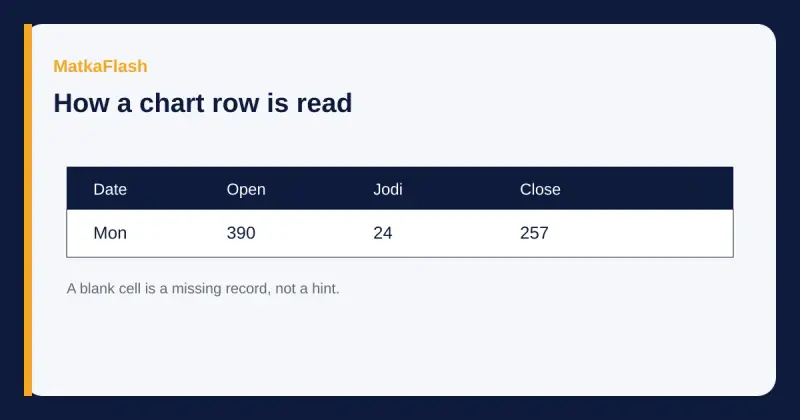
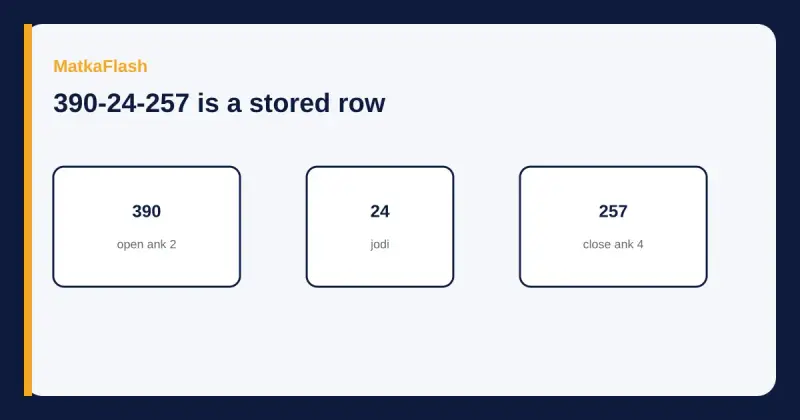
A pair that shows twice in one week is a fact about those two dates. Kalyan on 6 November 2026 is stored as 390-24-257. That row does not make 24 due on the 7th, and the 7th is stored as a holiday in any case. Copying the pair forward would falsify the holiday. Leaving it on the 6th is the record. The day board is where that line belongs.
Chasing a loss
Chasing is the decision to stake again in order to undo a loss. The chart cannot undo it. The earlier money is spent whether the next row matches or not. A larger stake after a miss raises what can be lost. It does not raise a debt the draw owes you. If the money is rent or food, the family guide is the practical page. If the offer is a paid list that claims to know the due digit, it is the product described in the guessing guide, not a correction of the fallacy.
A screenshot of a hit after a chase is one selected day. The misses that funded the hit are usually absent from the picture. An archive does the opposite: it keeps every stored day, including the holiday and the blank. That is why a results page is a poor oracle. It remembers too much to support a story about what is due.
Common questions
If an ank has not appeared for a long time, is it due?
No. If draws are independent, a long miss does not change the next chance. Due is a story about the past, not a property of the next row.
Is each ank really one in ten?
Only inside a model where digits 0 to 9 are equally likely and the next draw has no memory. This page does not claim that a real matka draw has been measured to work that way, and it is not a payout.
Does a hot pair in the chart have a habit?
It has a count. The count describes the dates already stored. It does not pull the next date toward the same pair.
Does chasing recover the loss?
No. Another stake is another amount that can be lost. The earlier loss is not refunded by the chart.
Sources
- MatkaFlash guide on why guessing does not name the next rowmatkaflash.com
- MatkaFlash results for 6 November 2026matkaflash.com
- MatkaFlash editorial policymatkaflash.com
- Directorate General of Health Services, National Mental Health Programmedghs.mohfw.gov.in
Keep reading
 BasicsWhy guessing and fix ank do not workA matka chart records a draw that already happened. Fix ank lists and weekly jodis do not name the next independent draw.6 min read
 BasicsHow to read a jodi or panel chartWhat the date, open panna, jodi and close panna columns record, and why a blank cell is not a forecast.6 min read
 BasicsWhy a results page does not sell tipsWhat a dated matka record can show, what it cannot know, and why the MatkaFlash desk does not sell a coming number.5 min read
 BasicsA plain glossary of matka chart termsWhat open, close, jodi, panna, ank, sangam, starline and jackpot mean on a results page, using a stored Kalyan row.6 min read